
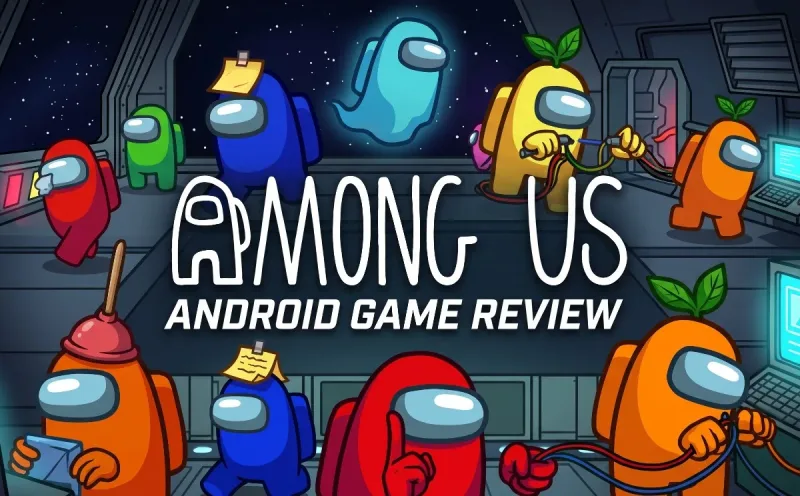
Back in 2020, few mobile titles managed to dominate casual gaming culture quite like Among Us. Developed by indie studio Innersloth, the game transformed living rooms, group chats, and Discord servers into high-stakes courtrooms filled with pointing fingers, panicked alibis, and hilarious betrayals. What began as an overlooked 2018 party game quickly exploded into a global phenomenon.
Years later, the viral wave has settled, leaving behind a crucial question for mobile gamers: does the portable experience still hold up on touchscreens?
In this in-depth Among Us Android game review, we examine the mobile interface, ongoing gameplay mechanics, performance across devices, monetization model, and how recent updates shape the current state of social deduction in your pocket.
The Core Concept: Teamwork Meets Murder
At its core, Among Us is a digital version of classic hidden-role parlor games like Mafia or Werewolf. Players board a spaceship, research outpost, or jungle environment with divided allegiances:
-
Crewmates must wander through various compartments to complete mini-game style maintenance tasks (rewiring circuits, clearing asteroid fields, swiping keycards) while attempting to survive.
-
Impostors pose as standard crew members while secretly sabotaging vital ship systems (O2 levels, reactor cores, lighting grids) and assassinating isolated crewmates without leaving witnesses.
The real meat of the game begins when a body is discovered or an Emergency Meeting is called. The live action freezes, and everyone enters a timed group chat to present their alibis, point fingers, and deliberate. If the majority votes for a suspect, that player is ejected into space. The Crewmates win by completing all tasks or expelling every Impostor; the Impostors win by eliminating enough Crewmates until their numbers match, or when a critical sabotage countdown reaches zero.
It remains an undeniably brilliant psychological loop. Paranoia turns every dark corridor into a nerve-wracking gamble, and innocent behavior often looks damning under intense peer pressure.
Touchscreen Controls and Mobile Usability
Translating a game that thrives on spatial awareness and rapid maneuvering onto an Android touchscreen is no simple feat, but Innersloth nailed the fundamentals early on.
Movement and Steering
Players can choose between two primary control configurations in the Android settings menu:
-
Touch-to-Move: You tap where you want your spaceman to run. While intuitive for non-gamers, it tends to clutter the screen with your fingers during tight, tense moments.
-
Virtual Joystick: A fixed or dynamic directional pad placed under your left thumb. This is by far the preferred method, offering fluid navigation around tight corners, through automatic sliding doors, and away from suspicious shadows.
Interaction triggers appear dynamically on the lower-right side of your screen: dedicated action buttons light up when you are within range of an interactable console, body, vent, or kill target.
The Mini-Game Task Design
Mobile touch controls shine brightest during task execution. In fact, many tasks feel more natural on a glass screen than with a mouse and keyboard. Swiping card strips, spinning calibration dials, tracing electrical wiring paths, and punching keypad pins all translate into tactile tactile gestures that feel right at home on Android.
The Chat Dilemma: Mobile Keyboard vs. Quick Chat
If there is a fundamental friction point in any Among Us Android game review, it is communication.
Because the game relies so heavily on rapid-fire rhetoric, mobile players face a distinct disadvantage during text-based deliberations. When an emergency meeting starts, you have a limited timer to defend your whereabouts, counter an accusation, and persuade nine other players.
-
The On-Screen Keyboard: Typing out full sentences on an Android keyboard takes up half your screen, leaves you blind to incoming chat messages, and often introduces typos that make you look guilty under pressure.
-
Quick Chat Wheel: To combat toxicity, speed up discussions, and assist younger audiences, Innersloth introduced a contextual Quick Chat interface. It features pre-sorted categories (Who, Where, Why, Suspects, Alibis). While helpful, navigating nested menus to form sentences like "Blue vented in MedBay" can still feel clunky when seconds are ticking down.
For the ideal mobile experience, the solution is straightforward: play in private lobbies using background voice chat (such as Discord). When played over voice with friends, the mobile version matches the PC experience in every meaningful way.
Gameplay Evolution: New Roles, Modes, and Maps
One reason Among Us maintains a healthy community is Innersloth’s commitment to expanding the core formula. Vanilla games with standard Crewmates and plain Impostors are now only part of the equation.
Expanded Character Roles
Modern lobbies support several specialized player roles that inject fresh strategic layers into matches:
-
Scientist: Can monitor vitals remotely to check who is dead or alive, needing to recharge the battery by completing tasks.
-
Engineer: Allows a Crewmate to enter ventilation shafts, a power previously exclusive to Impostors—though doing so can easily spark misunderstandings if someone catches you.
-
Guardian Angel: Gives the first eliminated ghost the ability to cast temporary protective shields over living teammates to block a kill attempt.
-
Shapeshifter: Enables an Impostor to temporarily assume the skin and color of another Crewmate, planting false evidence and sowing chaos during meetings.
-
Tracker & Noisemaker: Specialized Crew roles designed to follow suspicious players on the minimap or broadcast a map-wide warning ping upon elimination.
-
Phantom: An elusive Impostor variant that turns temporarily invisible to stage ambushes or slip past security cameras undetected.
Dynamic Map Selection
The game offers multiple distinct arenas, each possessing unique layouts and environmental hazards:
| Map | Size | Key Features | Playstyle |
| The Skeld | Medium | Tight corridors, interconnected vents, iconic central cafeteria | Balanced, classic starter map |
| MIRA HQ | Small | Universal door logs, no security cams, isolated high-rise rooms | Intense, fast-paced deduction |
| Polus | Large | Open outdoor lanes, seismic stabilizers, individual temperature tasks | Spread-out, tactical hunting |
| The Airship | Massive | Moving platforms, ladders, randomized spawn locations | High coordination, complex navigation |
| The Fungle | Large | Mushroom canopies, ziplines, campfire cooking, blackout spore sabo | Fluid traversal, sneaky ambushes |
Hide 'n Seek Mode
For players exhausted by heated debates and text debates, the official Hide 'n Seek mode turns the game into pure arcade survival. In this mode, the Impostor’s identity is revealed immediately, the lights drop, and Crewmates must race across the map completing tasks to fill a countdown meter before the hunter tracks them down. It removes voting entirely and provides an adrenaline-fueled, action-heavy alternative tailored for quick phone sessions.
Technical Performance and Crossplay
One of the greatest technical strengths of Among Us on Android is its modest hardware footprint. Built on an optimized 2D engine with clean, hand-drawn vector aesthetics, the game runs smoothly even on entry-level budget phones and older tablets.
-
Battery Consumption: Moderate. Because the graphics rely on 2D sprites rather than resource-heavy 3D shaders, an hour of gameplay barely warms up mid-range processors.
-
Network Stability: The netcode has seen massive improvements since the server crashes of 2020. Ping is visible before joining public lobbies, and reconnect stability is dependable.
-
Full Cross-Platform Support: Android players share servers seamlessly with users on iOS, PC, Nintendo Switch, PlayStation, and Xbox. Matchmaking pools are consistently populated around the clock.
Monetization and Free-to-Play Balance
Unlike many free mobile titles burdened by predatory energy meters, pay-to-win mechanics, or unskippable video ads after every two minutes of play, Among Us on Android maintains a fair free-to-play model:
-
Zero Pay-to-Win: Every map, balance update, core role, and game mode is 100% free for all players. Paying money confers zero competitive advantage.
-
Cosmetic Progression: The store relies on hats, skins, visor cosmetics, nameplates, and pets. Players can earn free currency ("Beans") just by playing matches, which unlocks themed progression trees called Cosmicubes.
-
Non-Intrusive Ads: Free mobile players experience brief interstitial ads between rounds, which can be permanently removed with any minor in-app purchase.
The Public Lobby Reality
No review would be honest without acknowledging the Achilles' heel of Among Us: public lobbies.
When you join a public game without friends, the experience can vary wildly:
-
Impatient players frequently quit within seconds if they are not assigned the Impostor role.
-
Random lobbies can suffer from spam, trolling, or silent players who refuse to contribute during meetings.
-
Friends communicating outside the match sometimes cheat by revealing the Impostor over private calls.
Innersloth has mitigated these issues through account linking, lobby filtering (by language, skill level, and chat style), reporting tools, and temporary cooldown penalties for intentional quitters. Even so, the game remains at its absolute peak when played in a structured lobby with friends or organized community groups.
Strengths and Weaknesses
Pros:
-
Addictive social deduction gameplay that rarely plays out the same way twice.
-
Zero pay-to-win mechanics; maps and modes are completely free.
-
Full crossplay with PC, consoles, and iOS.
-
Touchscreen controls complement mini-game tasks naturally.
-
Regular balance patches, new roles, and fresh maps keep the meta interesting.
Cons:
-
Typing text alibis on mobile keyboards is awkward during tight voting timers.
-
Public matchmaking can still be inconsistent with quitters and trolls.
-
Quick Chat wheel, while helpful, can feel restrictive in complex debates.
Final Verdict: 4.5 / 5 Stars
Among Us on Android proves that simple visual design paired with brilliant social engineering never goes out of style. While it no longer commands the frenzy of its early days, it has evolved into a much better, more feature-complete, and balanced title than it was during its viral prime.
The mobile version provides the complete, unabridged console/PC experience without compromises, making it one of the finest free multiplayer titles available on the Google Play Store. Grab a headset, recruit a few friends, and keep an eye on your back in Electrical.




Comments
No comments yet. Be the first to ask a question or share an update.
Leave a comment
Your mobile number is never published. Comments appear after review. Website links, email addresses and code are not allowed.